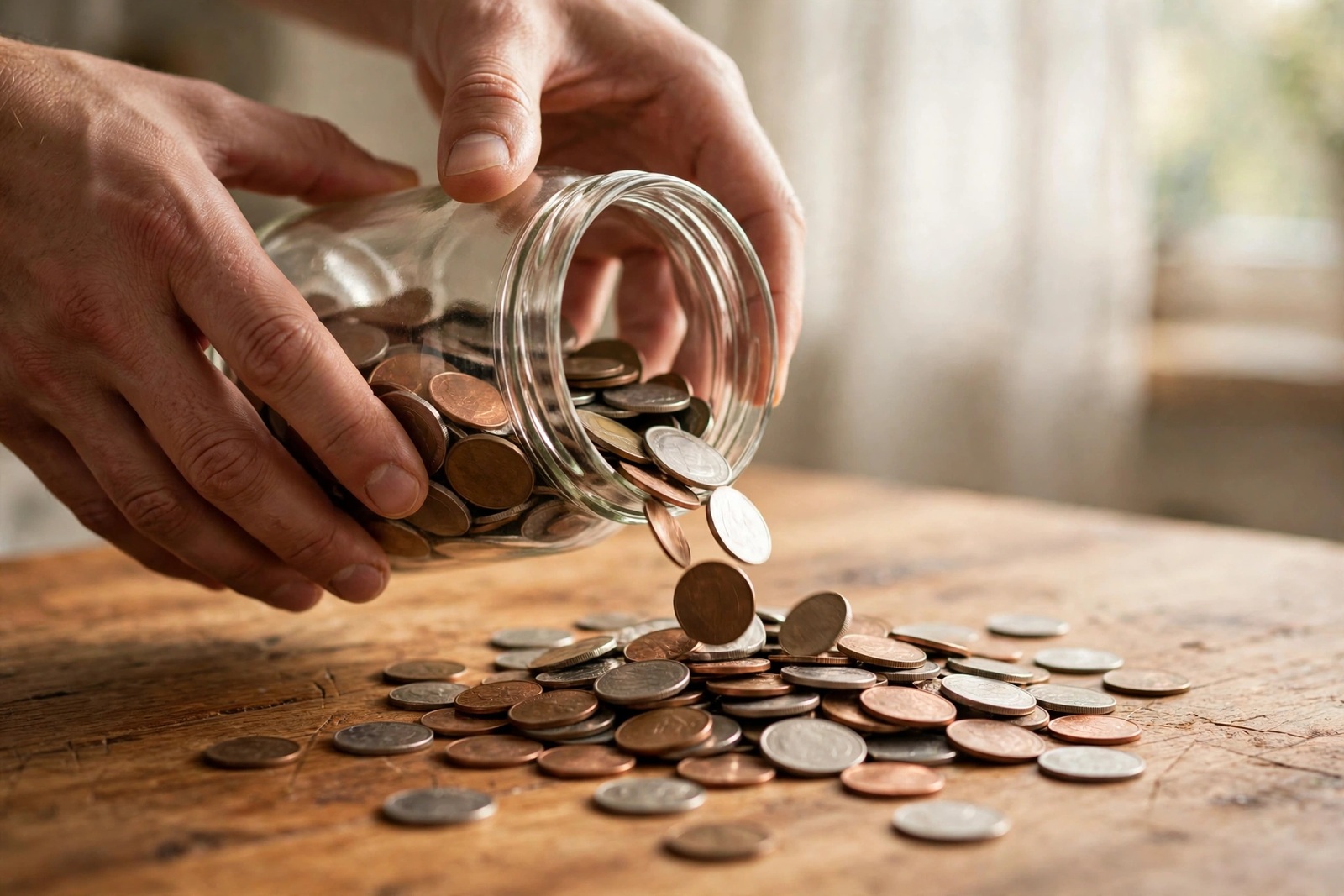
My change jar sat on top of my dresser for almost two years. Every evening, the coins from my pockets went in with a clink, and I never thought much about it — until I finally tipped the whole thing onto the kitchen table and realized I was looking at real money. Figuring out how to deposit coins at the bank took me one clumsy first trip and one much smoother second one, and the difference was entirely preparation. This guide is the second trip, written out, so you can skip the first.
The short version: most banks and credit unions will take your coins, but they want them sorted, counted, and handed over in a way their tellers can process. A little sorting at home turns a heavy jar into a five-minute deposit.
How to Deposit Coins at the Bank, Step by Step
When people ask how to deposit coins at the bank, they usually picture dumping a jar on the counter and walking out with a receipt. That almost never happens. Here is how to deposit coins at the bank without holding up the line or getting sent home to sort.
1. Sort your coins by denomination
Dump the jar out, pull out anything that is not a US coin — foreign coins, tokens, buttons, and the odd washer all sneak in — and make one pile per denomination: pennies, nickels, dimes, quarters, and dollar coins if you have them. Set aside bent, badly damaged, or filthy coins; banks may refuse those, and one jammed coin can slow down a counting machine for everyone behind you.
2. Roll them — or check whether you need to
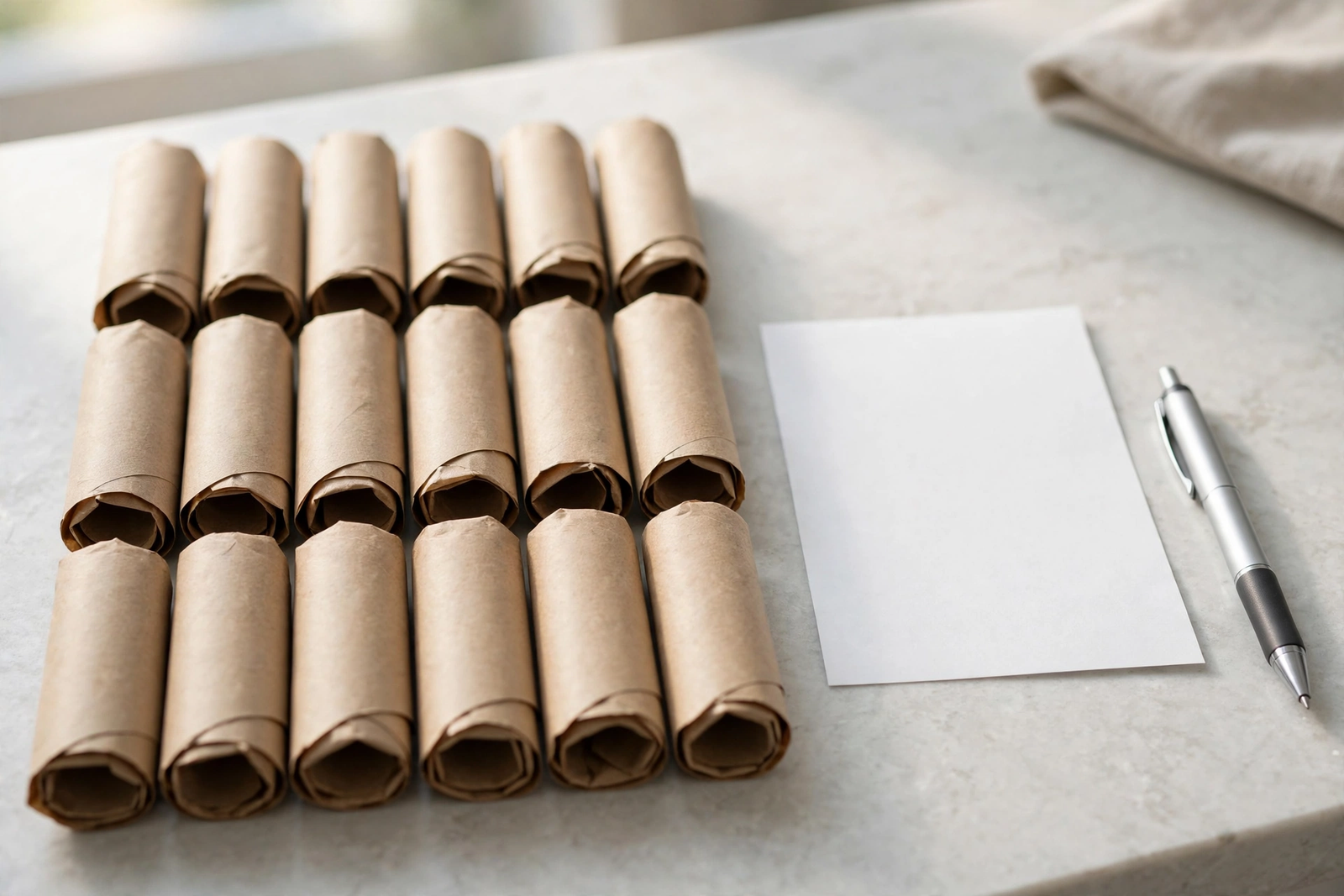
Coin wrappers are paper tubes sized to hold a fixed count of each coin, and most banks still prefer rolled coins. You can pick up free wrappers at your own bank’s branch or buy a pack at a dollar store for a couple of dollars. The standard roll amounts are worth memorizing:
| Coin | Coins per roll | Value per roll |
|---|---|---|
| Penny | 50 | $0.50 |
| Nickel | 40 | $2.00 |
| Dime | 50 | $5.00 |
| Quarter | 40 | $10.00 |
| Dollar coin | 25 | $25.00 |
Count carefully, fold the ends tight, and write the total on your deposit slip. Do not seal rolls with tape unless your bank asks for it — tellers often open a roll or two to spot-check the count. Some banks and credit unions now accept loose coins through a counting machine instead, so a quick call to your branch before you roll fifty dollars in pennies can save you an evening of work.
3. Fill out the deposit slip
A standard deposit slip has a line for coins, separate from cash and checks. Write your name, account number, the date, and the total coin amount, and keep the slip with the rolls. If you need a refresher on the slip itself, my walkthrough of how to fill out a deposit slip covers each line. Bring your debit card and a photo ID too — some branches ask for ID on larger coin deposits, and having it ready beats a second trip.
4. Hand them over inside the branch, and check the receipt
Coin deposits are an inside-the-branch job. Drive-thru tubes are not built for heavy rolls, and most banks will ask you to come in. Hand the teller the rolls and the slip, let them count or run the rolls through their sorter, and read the receipt before you leave the window. If the teller’s total differs from yours by a roll or two, that is the moment to sort it out — not three days later when the rolls are gone.
The Coin Machine Route
Another answer to how to deposit coins at the bank is the self-service coin machine. A shrinking number of banks and credit unions still have one in the lobby: you pour in loose coins, the machine counts them, and it prints a receipt you take to the teller for deposit. No rolling, no wrappers, no sore thumbs.
If your bank does not have a machine, the supermarket Coinstar kiosk is the familiar fallback — but read the trade-off before you pour. Coinstar typically charges a coin-counting fee of roughly 13% when you take cash, which turns an $80 jar into about $70. You can dodge that fee by choosing a gift card payout instead of cash, if you actually shop at one of the offered stores. For a straight deposit into your own account, your bank’s free route wins every time.
What Banks Charge for Coin Deposits
The cheapest version of how to deposit coins at the bank is also the simplest: rolled coins deposited into your own account are usually free. Fees show up at the edges, and they vary by bank, so treat this table as the usual pattern rather than a promise:
| Route | Typical cost |
|---|---|
| Rolled coins, own bank | Free |
| Loose coins through a bank machine | Usually free for account holders |
| Loose coins counted by hand | Sometimes a fee for large amounts |
| Coinstar cash payout | Roughly 13% of the total |
| Coinstar gift card payout | Usually no fee |
| Non-customer coin deposit | Often refused, or a fee if accepted |
If you do not have a bank account yet, a coin jar is a surprisingly good reason to open one — a free checking account with no minimum balance gives you somewhere to put the money and a free coin route at the same time. The FDIC’s GetBanked page is a solid starting point if you are choosing your first account.
A Real Jar, Worked Out
Here is the jar from my kitchen table, counted honestly: 212 quarters ($53.00), 96 dimes ($9.60), 140 nickels ($7.00), and 318 pennies ($3.18). Total: $72.78. Rolling took about forty minutes in front of the television, and the deposit itself took under five minutes at the teller window. That $72.78 paid for a week of groceries, which felt a lot better than another year of clinking.
Your jar will differ, but the math lesson holds: quarters carry the total. A jar that looks mostly silver is usually worth more than a jar that looks mostly copper, and counting before you go means you will notice immediately if the teller’s total is off.
Mistakes That Slow You Down
The biggest mistake in how to deposit coins at the bank is showing up with an unsorted bag and hoping the branch will sort it for you. Most will not, and the ones that do may charge for the privilege. Other traps I have seen: bringing coins to the drive-thru, mixing in foreign coins that jam the sorter, forgetting ID on a deposit over a few hundred dollars, and — my own first-trip error — writing the wrong total on the deposit slip because I guessed instead of counting. Count first, write second, and keep your own tally until the receipt matches it.
One more honest note: banks are not required to take unlimited coins from anyone who walks in, and a few branches have quietly stopped accepting loose coins at all. A two-minute call to your branch — “Do you accept rolled coin deposits, and do you have a coin machine?” — prevents the only truly wasted trip: carrying twenty pounds of change somewhere that will not take it.

FAQ
Can I learn how to deposit coins at the bank without rolling them?
Yes, if your bank or credit union has a coin-counting machine — call ahead and ask. Otherwise, rolling is the standard expectation, and loose coins may be refused or charged a fee.
Do banks charge a fee to deposit coins?
Rolled deposits into your own account are usually free. Fees are most common for loose coins, for non-customers, and at third-party kiosks like Coinstar, where a cash payout costs roughly 13%.
How much coin can I deposit at once?
There is no single national limit; it depends on your bank. Everyday jars under a few hundred dollars are routine. For very large amounts — a business’s coin haul, say — call the branch first so they can plan teller time.
What happens to coins that are damaged or foreign?
Tellers set them aside and return them to you, and they do not count toward your deposit. Pulling them out at home keeps the count clean and the machine running.
Can I deposit coins at an ATM?
Almost never. ATMs are built for notes and checks, not loose change. Use the teller window or a coin machine inside the branch.
The Bottom Line
That is how to deposit coins at the bank in one trip: sort, count, roll, fill out the slip, hand it over inside, and check the receipt before you leave. The jar on your dresser is not clutter — it is money you already earned, waiting for a forty-minute evening and a five-minute errand.
Disclaimer: This article is general educational information, not financial advice. Coin deposit policies, fees, and machine availability vary by bank and branch — confirm the details with your own bank before you go.