It was a Friday evening, my bank had closed at five, and a client had just handed me a $480 check I needed in my account before the weekend. The branch doors were locked, the drive-through lane was dark, and the ATM in the lobby glowed like a small lifeline. I had never deposited a check at a machine before, and for a solid minute I just stood there wondering whether the machine would eat the check, misread the amount, or send my money into the void. It did none of those things. Three minutes later I had a receipt with a picture of the check on it, and the money showed up on schedule. If you have ever wondered how to deposit a check at an ATM, here is the whole process, including the parts nobody tells you until you are standing in front of the machine.
Before You Leave Home: The 2-Minute Checklist
A failed attempt at how to deposit a check at an ATM usually starts at home, not at the machine. Run through this list before you go, because knowing how to deposit a check at an ATM starts with this checklist.
- The check itself, undamaged. No tears through the important parts, no coffee stains over the amount, no crumpled corners that could jam a scanner. A folded check usually works, but a mangled one may not.
- Your debit card and PIN. You need your own bank’s card for a deposit. A random ATM that is not your bank’s will almost never accept a check deposit into your account.
- A pen. You will sign the back of the check, and you want to do it correctly, not with a borrowed pen that barely works.
- Your account choice in mind. Know whether the money should land in checking or savings. The machine will ask, and guessing under pressure is how money lands in the wrong account.
One more thing: check that the front of the check is right before you leave. Your name spelled correctly as payee, the amount in numbers matching the amount in words, the payer’s signature present. An ATM scanner will happily accept a flawed check and your bank will reject it days later, which is a much worse outcome than catching the problem at your kitchen table.
Not Every ATM Takes Deposits
This is the surprise that trips up most first-timers. Plenty of ATMs only dispense cash. The ones that take deposits are usually your own bank’s machines, marked with a deposit slot or a “Deposits” option on the screen. Your bank’s app or website has an ATM locator with a filter for deposit-taking machines. Use it before you drive anywhere, especially late at night.
There are two kinds of deposit machines. Envelope-free ATMs scan the check directly: you feed it into a slot, the machine reads the amount, and you confirm it on screen. Older envelope ATMs give you an envelope, you put the check inside, write the amount on the outside, and slide the sealed envelope into the machine. Envelope-free is faster and gives you a receipt with an image of the check. Envelope machines still work fine, but your deposit is not verified until a person opens the envelope later, so mistakes take longer to surface.
A machine from another bank, a convenience store, or a casino will generally not take your check deposit at all. If it does offer the option, expect delays and possibly a fee. Stick to your own bank’s machines whenever you can.
How to Deposit a Check at an ATM
Walk up with your card and your endorsed check. Endorse the back now, in the box marked for endorsements: sign your name exactly as it appears on the front of the check, and write “For Deposit Only” above your signature if you want to lock the check to deposits. That one line stops anyone who finds the check from cashing it elsewhere. If you are learning how to deposit a check at an ATM for the first time, do the endorsement at home or in your car, not while a line forms behind you. Practicing how to deposit a check at an ATM at your own bank’s machine keeps the process simple.
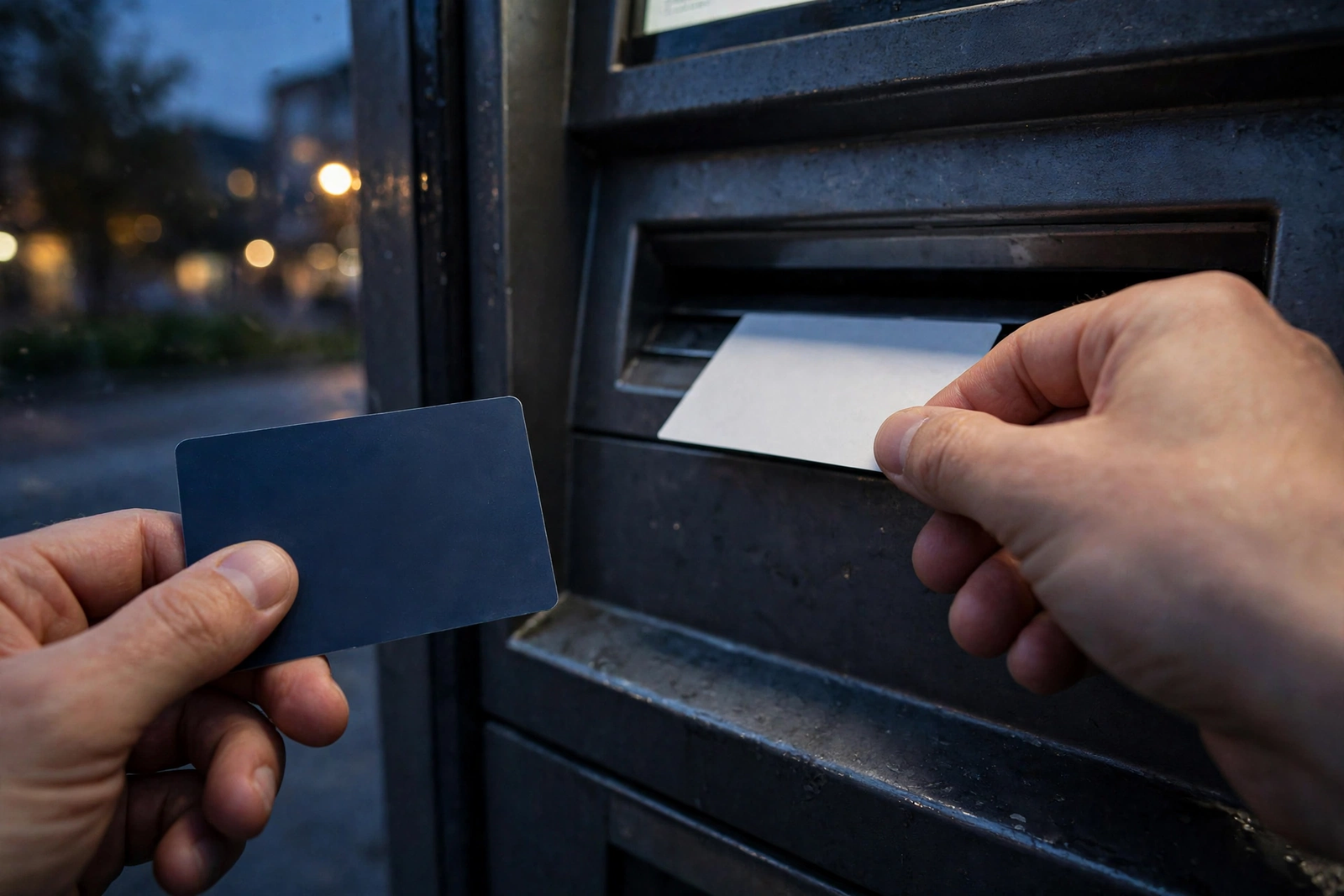
Insert your card, enter your PIN, and choose “Deposit” from the menu. Pick “Check” as the deposit type, then choose the account. On an envelope-free machine, the slot opens and you feed the check in face up, in the direction the screen shows. The machine scans it and displays the amount it read. This is the moment to slow down. If the scanner misread a digit, correct the amount on screen before you confirm. A $480 check confirmed as $48 is a headache that takes days to unwind.
On an envelope machine, put the check in the provided envelope, write the total on the outside, seal it, and insert it when prompted. Either way, take the receipt. On an envelope-free machine the receipt usually includes a small image of the check, which is your proof of exactly what you deposited. Keep it until the funds clear. Finally, wait for the screen to return to the welcome screen and confirm your card is back in your hand before you walk away. It sounds obvious, but a surprising number of people leave cards in machines while staring at their receipt.
If you are still unsure about the paper side of things, our guide on how to fill out a deposit slip covers the same endorsement rules for branch deposits, and the details match what the ATM expects.
When Will the Money Be Available?
This is where expectations collide with banking rules. An ATM deposit is not instant cash. Under federal funds-availability rules, for a check deposited at your own bank’s ATM, the first $275 must be available by the next business day. The rest generally becomes available by the second business day, though your bank’s policy controls the exact timing. Deposits made after the machine’s cutoff time, which can be as early as noon at some banks, count as the next business day’s deposit.
Some deposits take longer, and the bank has to tell you when that happens. Large deposits over about $7,000, deposits into a brand-new account, checks that have bounced before, or an account with repeated overdrafts can all trigger an extended hold of up to several business days. A deposit at another bank’s ATM, if it is accepted at all, can be held up to five business days. None of this means something went wrong. It means the bank is verifying a paper instrument, which still takes time in a digital world.
| Deposit situation | Typical availability |
|---|---|
| Own bank’s ATM, normal check | First $275 next business day, rest by second business day |
| After the cutoff time | Counts as the next business day |
| Large deposit (over about $7,000) | Extended hold possible, bank must notify you |
| Another bank’s ATM | Up to five business days |
| New account (under 30 days) | Longer holds allowed |
After the deposit, check your account in the app the next morning. The deposit should appear as pending or posted. If you want a habit that catches problems early, learning how to balance a checkbook, even in a simple spreadsheet, means a missing deposit jumps out at you instead of hiding for weeks.
If Something Goes Wrong at the Machine
Machines jam. Scanners misread. Screens freeze. Here is what to do for each common failure when you are figuring out how to deposit a check at an ATM and the machine does not cooperate.
The machine keeps your check but gives no receipt. Do not leave. Note the machine’s location, the time, and the amount. Call your bank’s number, which is usually printed on the machine, and report the retained deposit before you leave the area if you can. The bank can reconcile the machine’s contents against your claim.
The scanned amount is wrong. Cancel the transaction if the machine lets you, and try again with the check flatter and cleaner. If it misreads twice, use a different machine or go inside during branch hours. Never confirm an amount you know is wrong.
The machine returns your check. This usually means the check is damaged, the endorsement is missing, or the machine cannot read the magnetic ink line at the bottom. Try once more, then switch to mobile deposit or a teller rather than forcing it.
You forgot your card in the machine. Most machines pull an uncollected card inside after about thirty seconds. Call your bank to ask whether it was retained and where to collect it, and do not try to pry the machine open.
The deposit never shows up. Wait one full business day past the expected availability, then call with your receipt in hand. The receipt’s image and transaction number turn a vague complaint into a traceable case.
ATM Deposit vs Mobile Deposit vs Teller
All three get the check into your account, and the best choice depends on the day you are having. An ATM deposit works after hours, handles larger checks than some mobile apps allow, and gives you a printed receipt. Mobile deposit wins on convenience, since you never leave the house, but many banks cap mobile deposits at a few thousand dollars a day and hold them longer. A teller wins when something is unusual: a damaged check, a third-party check, or a deposit you want verified on the spot by a human. For a normal paycheck on a normal day, knowing how to deposit a check at an ATM gives you the middle path: faster than a branch visit, more generous than an app.
If you do not have a bank account yet, none of this works, so that is the first step. The FDIC’s GetBanked program lists banks that offer low-cost accounts, which is a practical starting point before your next paycheck arrives.

Frequently Asked Questions
Can I deposit a check at any ATM? No. How to deposit a check at an ATM generally requires your own bank’s deposit-taking machine. Other banks’ machines and cash-only ATMs will not accept your check deposit.
Do I need to endorse a check for an ATM deposit? Yes. Sign the back exactly as your name appears on the front, and add “For Deposit Only” for extra safety. An unendorsed check can be rejected or delayed.
How long does an ATM check deposit take to clear? The first $275 is available by the next business day for a deposit at your own bank’s ATM, with the rest usually available by the second business day. Large deposits, new accounts, or deposits after the cutoff time can take longer.
What if the ATM misreads my check amount? Correct the amount on screen before confirming. If the machine keeps misreading it, cancel and use mobile deposit or a teller instead. Confirming a wrong amount creates a correction process that takes days.
Once you have done it a single time, how to deposit a check at an ATM stops feeling like a gamble. Endorse it, use your own bank’s machine, confirm the scanned amount, and keep the receipt until the money clears. The machine does the hard work. Your job is just the thirty seconds of care before you feed the check in. Knowing how to deposit a check at an ATM this way makes the next deposit feel routine.
Disclaimer: This article is general educational information, not financial advice. Funds-availability rules and ATM features vary by bank, and deposit limits, cutoff times, and hold policies differ, so check your bank’s deposit agreement for the terms that apply to your account.