My first mailed rent payment was a $650 money order, and I nearly ruined it before it ever left my kitchen table. I had filled in the landlord’s name, but I left the purchaser section blank, tossed the receipt stub in a junk drawer, and dropped the whole thing in a thin white envelope with regular postage. It arrived fine, but only luck saved me. That week taught me how to send a money order by mail safely, and the lessons have stuck with me ever since: a money order is only as safe as the steps you take before you seal the envelope.
A money order is a solid choice when you cannot pay by check or card. The funds are prepaid, so the recipient is not waiting on your account balance, and the document names a specific payee. The catch is that a paper payment travels through a lot of hands. The guide below covers how to send a money order by mail safely from the counter to the mailbox, because every shortcut you take hands one of those hands a chance to cause trouble.
Why a Mailed Money Order Is Safer Than Cash (and Riskier Than You Think)
Mailing cash is asking for a loss. Anyone who opens the envelope can spend it, and you have no paper trail at all. A money order fixes both problems, but only partly. Once you write the payee’s name on it, a thief cannot simply walk into a store and cash it without forging a signature and showing ID, which is a federal crime for postal money orders. You also keep a receipt stub with a serial number, which lets the issuer check whether the payment was cashed.
Here is the part people miss: an unfinished money order is almost as risky as cash. Leave the payee line blank and anyone who finds it can write in their own name. Lose the receipt stub and you lose the serial number you need to trace it. Send it in a see-through envelope with no tracking and you will not know it went missing until the landlord calls asking where the rent is. The safety comes from the process, not the paper itself.
How to Send a Money Order by Mail Safely, Step by Step
Step 1: Buy it from a seller you trust
Post offices, banks, credit unions, Walmart, and grocery stores all sell money orders. A USPS domestic money order covers amounts up to $1,000, so a larger payment may need two. Pay with cash or a debit card. Most sellers will not take a credit card, and the few that do treat it as a cash advance, with fees and interest from day one. Check that the receipt amount matches what you paid before you leave the counter.
Step 2: Fill in every field at the counter, in pen
Do this before you leave the building, not later at home. Write the recipient’s full legal name on the “Pay to” line. For a business, use its exact registered name, not a nickname or a shortened version. A misspelled payee name can get the payment rejected at the recipient’s bank, and fixing that mistake costs time and sometimes a fee.
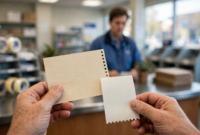
Fill in your own name and address in the purchaser section, sign where the form asks for the purchaser’s signature, and add an account or invoice number on the memo line if you are paying a bill. Use a pen, never pencil. Then tear off the receipt stub and keep it separate from the money order itself. If you have never bought one before, read our guide on how to fill out a money order first, because the fields differ slightly between issuers.
Step 3: Photograph both sides
Take a clear phone photo of the front and back of the completed money order, plus a photo of the receipt stub. Photographing the document is a small part of how to send a money order by mail safely, but it is the part people skip most. Store the photos somewhere you can find them later, not just in your camera roll under a thousand other pictures. Email them to yourself or save them in a folder labelled with the payee and the date. This photo record is a simple part of how to send a money order by mail safely.
Step 4: Use a security envelope and hide the contents
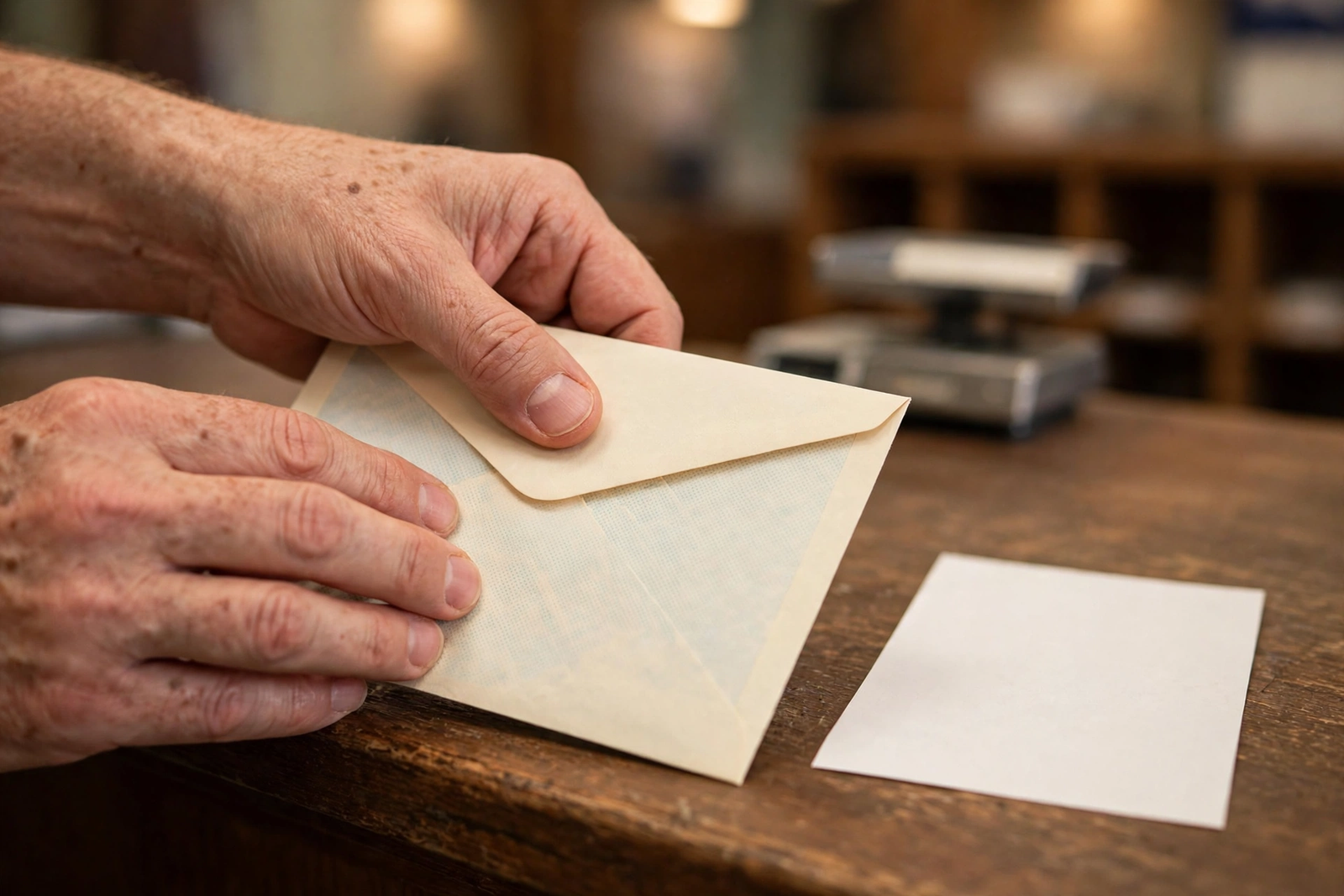
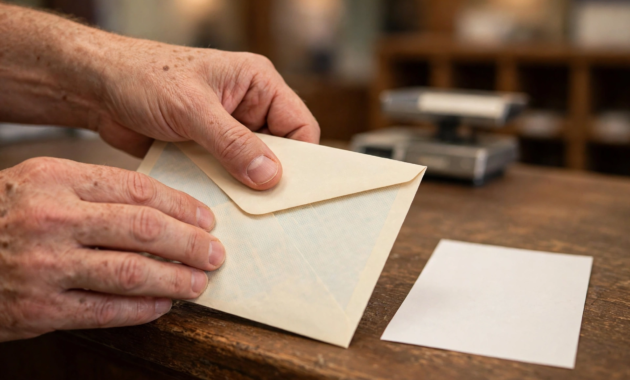
A standard white envelope is a bad choice. Hold one up to a light and you can often see what is inside. Use a security-tinted envelope, with a printed pattern on the inside, or wrap the money order in a plain sheet of paper first. Never write “money order” or “rent payment” on the outside. A plain envelope with a normal return address draws no attention, and that is exactly what you want.
Step 5: Pick a mailing service with tracking
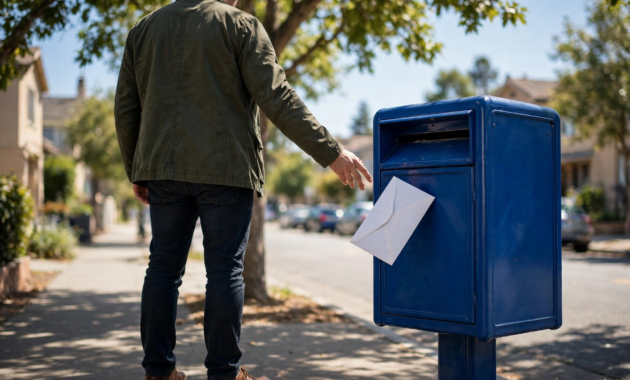
Regular first-class mail gives you no proof the envelope ever arrived. For a payment, that is not good enough. Certified Mail gives you proof of mailing and delivery confirmation, and adding a return receipt gives you a record of who signed for it and when. Priority Mail includes tracking and moves faster, usually in two to three business days. Registered Mail is the most secure option the post office offers, with a chain of custody and insurance up to $25,000, but it costs more and moves slower, so it fits large payments better than a monthly bill.
Tell the recipient the payment is coming, and roughly when. If they know a $650 money order should land on Thursday, they will tell you on Friday if it has not, instead of discovering the problem when a late fee appears.
Step 6: Keep the receipt until the payment clears
Do not throw the stub away the day you mail the envelope. Keep it until the recipient confirms they cashed or deposited the money order. That stub is your only proof of purchase, carrying the serial number, the issuing location, and the exact amount. Without it, tracing a lost payment becomes slower, more expensive, and sometimes impossible. I keep mine in a folder with the month’s bills and toss it only after the payment shows up as received.
Picking the Right Mailing Service
| Service | What you get | Best for |
|---|---|---|
| First-Class Mail | No tracking, no delivery proof | Nothing involving money, honestly |
| Certified Mail | Tracking plus proof of mailing and delivery | Most money order payments |
| Certified Mail with Return Receipt | Tracking plus a signature record | Rent, legal, or disputed payments |
| Priority Mail | Tracking, faster delivery in 2-3 business days | Time-sensitive payments |
| Registered Mail | Chain of custody, insurance up to $25,000 | Large or irreplaceable payments |
Prices change, so check the current fee at the counter. When you are deciding how to send a money order by mail safely, the mailing service is where cost meets proof: the more proof you buy, the less you have to argue about later. For a typical rent or bill payment, Certified Mail with a return receipt is the sweet spot between cost and protection.
What to Do If Your Mailed Money Order Goes Missing
First, check the tracking. If the envelope is still moving, wait a day or two before panicking. Postal delays happen, especially around holidays. If tracking shows delivery and the recipient says nothing arrived, ask them to check with anyone else at the address who might have signed for it.
If the payment is genuinely lost, contact the issuer right away. If you followed the steps for how to send a money order by mail safely, you already have the receipt and the photos you need. For a USPS money order, that means filing a Money Order Inquiry on PS Form 6401 at any post office, with your receipt and a photo ID. The inquiry fee is $21, and the investigation can take up to 60 days. If the money order has not been cashed, you get a replacement. If it has been cashed, you get a photocopy of the cashed document instead, which is what you would hand to the police if the endorsement was forged. Western Union and MoneyGram have their own research forms and fees, with timelines from a few business days to about eight weeks. Act fast either way. If the payment never arrives, our guide on how to stop payment on a money order explains the issuer-by-issuer process in more detail.
5 Mistakes That Get Mailed Money Orders Stolen or Rejected
Most failures in how to send a money order by mail safely come from one of these five slips, and every one of them is avoidable.
Leaving the payee blank. This is the single most common mistake, and the most dangerous. A blank money order is a blank check in practice.
Signing the back before mailing. The back is for the recipient’s endorsement. Signing it early makes the document easier for someone else to cash.
Writing the amount in pencil or correcting it by hand. Any alteration, even an honest correction, can get the money order refused. If you make a mistake, buy a new one or ask the seller to replace it.
Mailing it to a nickname or a short address. “Mike” is not a payee name, and an apartment number left off the envelope sends your payment on a tour of the building. Use full legal names and complete addresses.
Tossing the receipt. I have said it three times now because it matters that much. No receipt, no serial number, no easy trace. Keep it until the payment clears.
One last thought: if you are buying money orders every single month, the fees add up. A low-cost checking account is usually cheaper in the long run. The FDIC’s GetBanked program lists banks that offer accounts designed for people who are new to banking or rebuilding, and it is worth a look before your next rent payment is due.
Frequently Asked Questions
Is it safe to mail a money order? Yes. How to send a money order by mail safely comes down to filling it in completely, using a security envelope, and sending it with tracking. A mailed money order is far safer than mailed cash, but an unfinished one with no tracking is barely safer at all.
Can I track a money order through the mail? You can track the envelope through the postal service if you buy Certified, Priority, or Registered service. To check whether the money order itself was cashed, you need the serial number from your receipt and the issuer’s status tool or inquiry process.
What happens if a mailed money order is stolen? Report it to the issuer immediately with your receipt. If it has not been cashed, the issuer can replace it or refund it after an investigation. If it has been cashed by someone else, you will generally receive a photocopy of the cashed money order, which supports a police report and any fraud claim.
Can I send a money order internationally by mail? Yes, through a USPS international money order, but rules and tracking options differ by destination country. Check with the post office before buying, since some countries cap the amount or require specific forms.
Learning how to send a money order by mail safely comes down to one habit: finish the paperwork, protect the envelope, and keep the receipt. Do those three things and a mailed payment stops being a gamble. Skip them and you are trusting luck, which is a poor delivery service.
Disclaimer: This article is general educational information, not financial advice. Money order fees, limits, and mailing service prices vary by issuer and change over time, so confirm current terms at the counter before you buy or mail a money order.