Picture this: you mailed a $900 money order to your landlord, then realized you wrote the wrong apartment number on the payee line — or worse, the envelope never arrived and nobody can tell you where it went. Your first instinct is to call someone and say “stop that payment.” With a personal check, that works. With a money order, it does not work the same way at all, and misunderstanding the difference can cost you the whole amount. Here is the truth about how to stop payment on a money order, issuer by issuer, including what to do when the receipt is gone.
The Hard Truth: There Is No Stop Payment on a Money Order
A stop payment on a check works because the money is still sitting in your bank account — you tell the bank not to release it. A money order is prepaid. You handed over the full amount plus a fee at the counter, and the issuer set those funds aside. There is no account to freeze and no withdrawal to block.
What you can do instead is file a refund or replacement request with the issuer — but only if the money order has not already been cashed. Once someone cashes it, the transaction is final. The issuer paid whoever presented the document, and it has no power to reverse that payment. The USPS says it plainly: there are no stop payments on postal money orders. What USPS offers instead is an inquiry that can lead to a replacement or refund.
So the real version of how to stop payment on a money order is a race against the clock: confirm the money order is still outstanding, then get your claim filed before anyone cashes it. Anyone researching how to stop payment on a money order should treat that order of operations as non-negotiable.
Step 1: Check Whether It Has Already Been Cashed
Before you pay any fee or fill out any form, verify the status. This step alone saves people from throwing good money after bad.
- USPS offers a free online status tool: enter the serial number, the Post Office number, and the issued amount to see whether a postal money order has been paid.
- Western Union’s online refund form includes a verification step that confirms whether your money order is eligible for a refund before you proceed.
- MoneyGram lets you start a refund request online, and the system flags whether the money order has already been cashed.
If the status shows “paid,” stop here. No issuer will refund a cashed money order, and paying a research fee will not change that. Your remaining options are contacting the recipient or, if you suspect fraud, filing a report with the issuer and local law enforcement.
Step 2: Find Your Receipt — It Is the Key to Everything
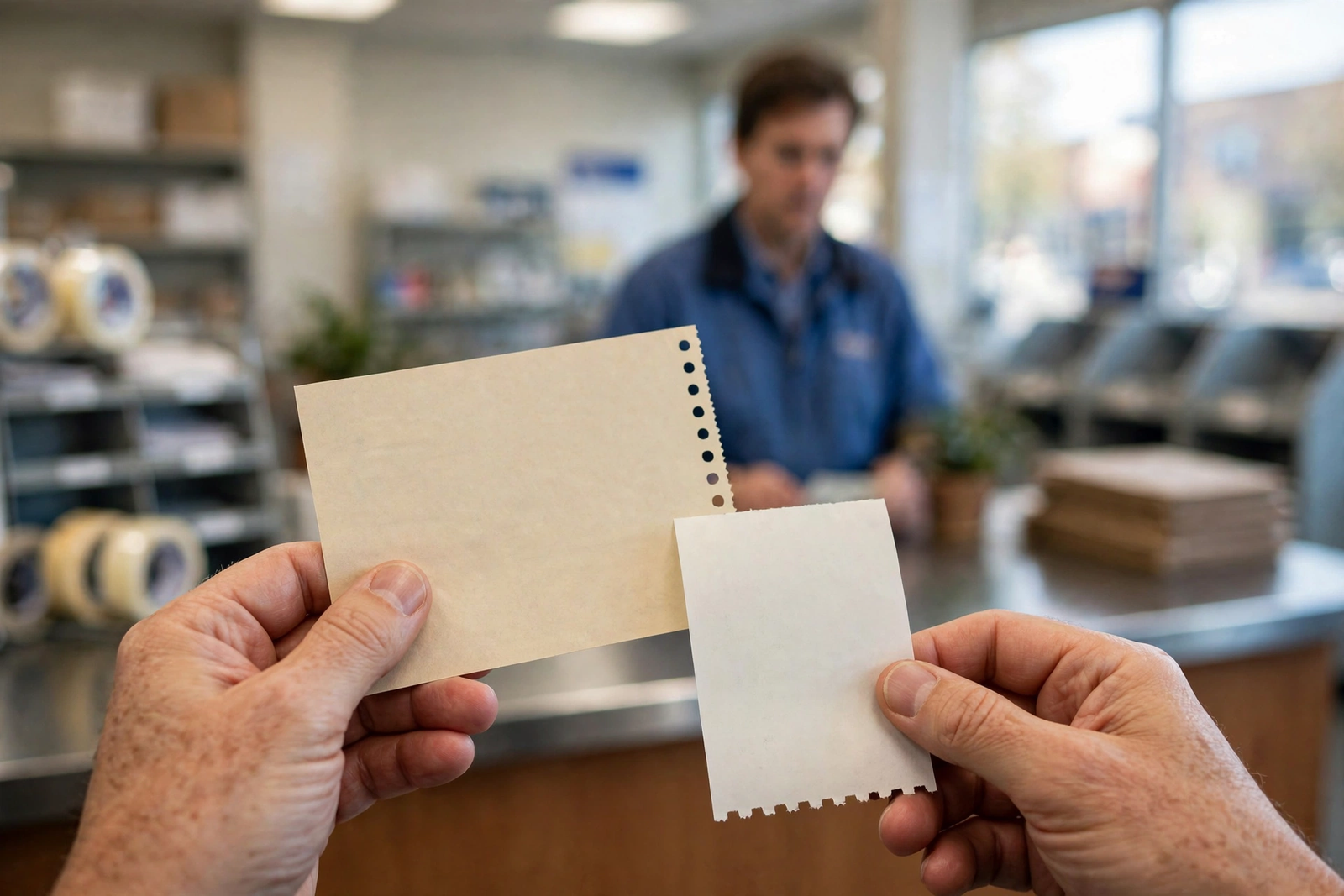
The single most important item in this process is your original purchase receipt, the detachable stub from when you bought the money order. It holds the serial number, dollar amount, purchase date, and often the store or post office location. Every issuer asks for it first.
If you still have the money order itself in your hands — say you never mailed it — the process is easiest of all. Take it back to the seller with your receipt and photo ID, and most issuers will cancel it on the spot and start the refund.
Photograph every money order receipt — ten seconds now can save weeks later.
How to Stop Payment on a Money Order With USPS
USPS does not allow stop payments, but it does allow an inquiry that leads to a replacement or refund for a lost, stolen, or damaged postal money order.
- Bring your purchase receipt and a photo ID to any Post Office.
- Complete PS Form 6401 (Money Order Inquiry) — one form per money order, filled out in black ink.
- Pay the processing fee. USPS charges a fee for lost or stolen money order inquiries (historically around $21; confirm the current fee at the counter, since USPS updates its price list regularly).
- A postal employee mails the completed form to the USPS accounting center in St. Louis for processing.
The wait is the painful part: processing can take 60 days or more, because USPS must be sure the original money order will not still turn up and get cashed. If your money order is damaged but you still hold it, bring it along with your receipt — damaged replacements carry no listed processing fee and move faster. That waiting period is the least pleasant part of learning how to stop payment on a money order, but it protects you from a double payout.
Note: a single domestic money order tops out at $1,000 — a $2,500 payment means three money orders and three PS Form 6401s.
How to Stop Payment on a Money Order With Western Union
Western Union’s process is more modern than USPS’s, and part of it can be done online.
- If you still have the money order and receipt: take both to a Western Union agent location for an in-person cancellation and refund.
- If you mailed it but have the receipt stub: complete the Money Order Customer Request form (available online) and return it by fax, email, or mail. There is a $15 processing fee, and processing can take up to 30 days. When Western Union issues your refund, it also issues a stop payment on the original money order.
- If you lost the receipt: you must complete the Money Order Research Request form and send it with a $30 non-refundable fee. Processing takes six to eight weeks. You will need the exact date, time, and location of purchase, plus the payee’s name.
Western Union’s online refund form first verifies whether your money order is still outstanding, so you find out early whether a refund is even possible.
How to Stop Payment on a Money Order With MoneyGram
MoneyGram splits its process by whether you have the receipt:
- With the receipt, money order in hand: visit a MoneyGram agent and cancel in person.
- With the receipt, money order mailed: file a claim with the Money Order Claim Card. Mail the form, your receipt stub, and an $18 processing fee to the address on the card. Total processing time can take up to 30 days.
- Without the receipt: complete a Money Order Search Form with the exact purchase date, location, and dollar amount. The search fee is $40 and non-refundable. If the search finds the money order uncashed, MoneyGram issues a stop payment and processes the refund. If MoneyGram cannot locate it, you get a letter saying no results were found — and no refund.
That $40 non-refundable search fee is the steepest in this guide, which is why the receipt matters so much. A ten-second phone photo at purchase time is worth $40 plus weeks of waiting.
What If You Bought It at a Bank or Credit Union?
Banks and credit unions that sell money orders set their own cancellation rules. Expect a form, ID on file, and the money order details; some enforce a 90-day wait before refunding, and some charge the same stop-payment fee as for checks — $25 or more. Call your bank first and ask for its exact form and fee.
Timeline: How Long Each Issuer Takes
| Issuer | Fee (with receipt) | Fee (without receipt) | Typical wait |
|---|---|---|---|
| USPS | Around $21 for lost/stolen inquiry | Higher, plus longer processing | 60+ days |
| Western Union | $15 | $30 (non-refundable) | Up to 30 days / 6–8 weeks without receipt |
| MoneyGram | $18 | $40 (non-refundable) | Up to 30 days |
| Bank or credit union | Varies, often $25+ | Varies | Up to 90 days in some cases |
Fees change, so treat these as starting points and confirm the current fee when you file. The waiting periods exist for one reason: the issuer must be certain the original money order will not be cashed after your refund goes out.
When a Refund Is Impossible
Be honest with yourself about these cases, because chasing them wastes fees:
- The money order was already cashed. Final, no matter the issuer.
- You cannot identify the issuer or the serial number, and have no receipt. Without enough detail to locate the money order, issuers cannot act.
- Too much time has passed and the money order was cashed long ago. Issuers keep records for years, but a cashed money order is a closed book.
If fraud is involved, file a police report and report it to the issuer. Forging or cashing a postal money order fraudulently is a federal crime carrying up to five years in prison — a report creates the paper trail a claim needs, even if it does not recover the money by itself.

Frequently Asked Questions
Can you stop payment on a money order after mailing it?
Not in the check sense — there is no bank account to freeze. But you can file a refund or cancellation request with the issuer if the money order has not been cashed yet: USPS uses PS Form 6401, Western Union its online or mail-in request form, MoneyGram its Claim Card.
How long does it take to get a money order refund?
Typically 30 days for Western Union and MoneyGram with a receipt, 60 days or more for USPS, and up to 90 days at some banks. Without a receipt, add several more weeks and a higher, often non-refundable fee.
Can I cancel a money order without the receipt?
Yes, but it costs more and takes longer. Western Union charges $30 for a research request, MoneyGram $40 for a search, and both require the exact purchase date, location, and amount. If the issuer cannot locate the money order, there is no refund.
What happens if someone cashes my lost money order?
Once cashed, the payment is final and the issuer cannot reverse it. If the person who cashed it was not entitled to it, your recourse is a police report and, potentially, a civil claim — not an issuer refund.
The Bottom Line
Learning how to stop payment on a money order really means learning how to cancel one fast: check the status first, find your receipt, file with the right issuer, and pay the fee. The single best protection costs nothing — photograph the receipt the moment you buy the money order, and fill in the payee’s full legal name before it leaves your hands. A blank money order is as good as cash to whoever finds it, and no refund process in the world fixes that.
Disclaimer: This article is general educational information, not financial advice. Issuer fees, forms, and processing times change, so confirm the current requirements with USPS, Western Union, or MoneyGram before filing.