Losing your wallet the same week a paycheck lands is the kind of bad luck that feels personal. I once watched a coworker stare at a $640 paycheck he could not touch because his driver’s license was sitting in a stolen purse, and the bank teller would not budge without it. He got his money eventually — but only after learning that “no ID” does not mean “no options.” If you need to know how to cash a check without ID, the honest answer is that it depends on the check, the place, and what backup documents you can pull together. Some routes are free, some cost a few dollars, and one or two are traps you should skip.

Why Banks Ask for ID in the First Place
Banks are not trying to ruin your day. Under federal rules, every bank runs a Customer Identification Program, and the standard way to verify a person is a government-issued photo ID — a driver’s license, a state ID, or a passport. The rule exists to stop fraud and identity theft, and tellers who skip it can get their bank in real trouble.
Here is the part most people miss: the same federal rule also tells banks to have a backup plan. When a customer cannot show a photo ID, banks are allowed to verify identity another way — by checking your information against other records, or by accepting a combination of other documents. That backup plan is why learning how to cash a check without ID is worth your time. The bank’s policy decides how generous that backup plan is, which is why calling ahead saves you a wasted trip.
6 Ways to Cash a Check Without ID
1. Go to Your Own Bank First
If you have a checking or savings account, your own bank is almost always the easiest place to start. The teller can pull up your account, match your signature on file, and ask security questions only you would know. Many banks will deposit the check into your account even when they will not hand you cash on the spot — and once the money is in your account, you can withdraw it with your debit card or at the ATM.
This works best when the check is made out to you and your account is in good standing. Bring your debit card, your account number if you know it, and anything else with your name on it. A deposit is easier to get approved than a cash-out, so if the teller hesitates, ask: “Can you deposit it instead of cashing it?” That one question turns a no into a yes more often than you’d think.
2. Visit the Bank Named on the Check
The bank printed on the front of the check — the “issuing bank” or “drawee bank” — is your second-best stop. That bank holds the check writer’s account, so it can check the signature and confirm the funds are really there in real time. Because of that, some branches will work with you even without a photo ID, especially if you bring secondary documents.
Expect a fee if you are not an account holder there. Most big banks charge non-customers somewhere between $5 and $10 per check, and some charge a percentage of the check amount instead. Checks under $25 or $50 are sometimes cashed free. Call the branch before you go and ask exactly what they accept — branch policies differ, and one branch may say yes while another says no.
3. Cash It at a Retail Store
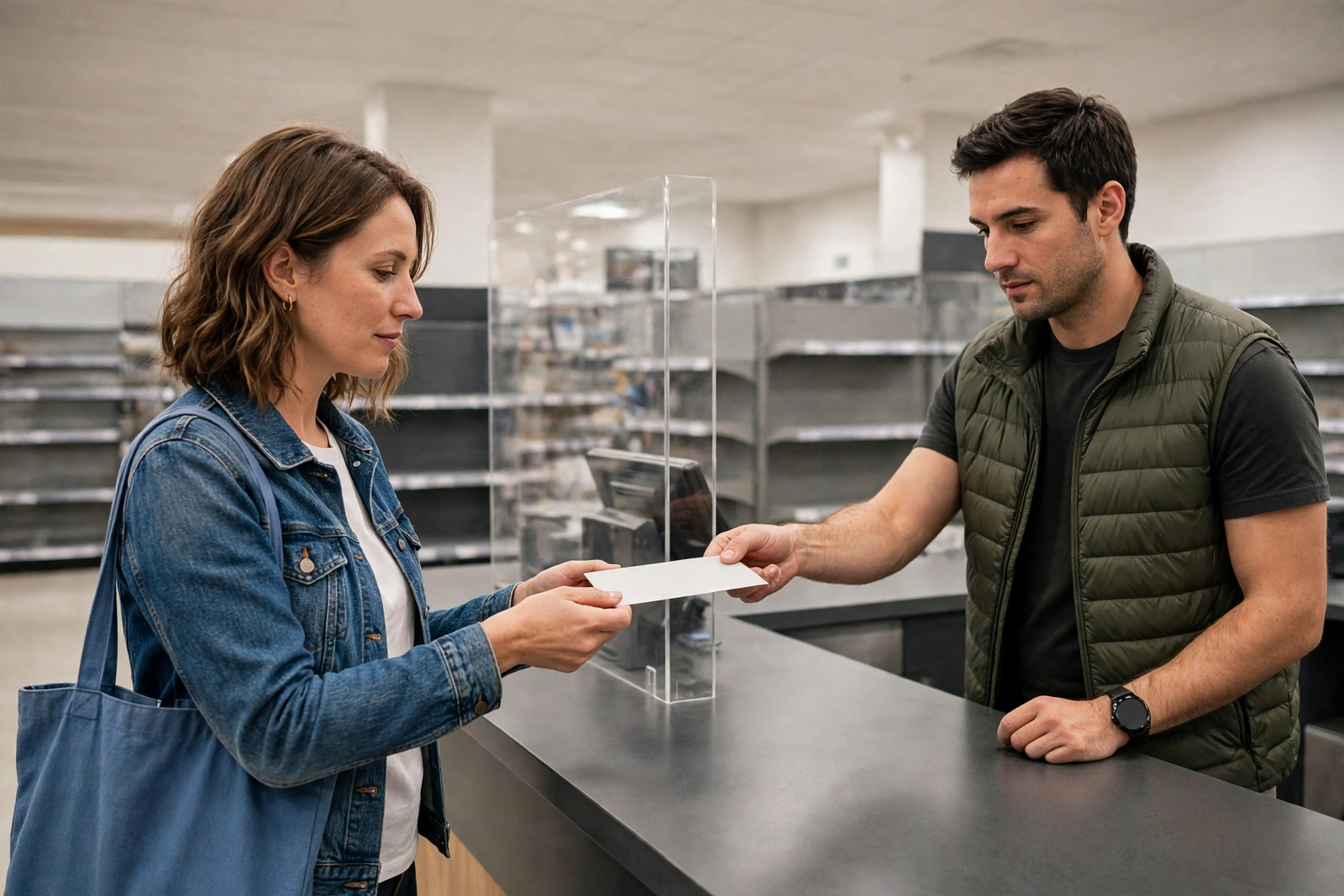
Walmart is the best-known option here, and it is cheap: a maximum of $4 for checks up to $1,000 and $8 for checks up to $5,000. Grocery chains like Kroger and dedicated check-cashing storefronts offer similar services, usually with more flexible ID rules than banks. They typically accept a mix of secondary documents — a Social Security card, a birth certificate, a utility bill — and run the check through a verification database.
Retailers mostly cash payroll, government, and tax refund checks. Personal checks are harder: Walmart caps two-party personal checks at $200. Dedicated check-cashing stores will take more types of checks, but their fees run higher, often 1% to 3% of the check amount — a real cost to weigh when learning how to cash a check without ID.
4. Deposit It With Your Bank’s Mobile App
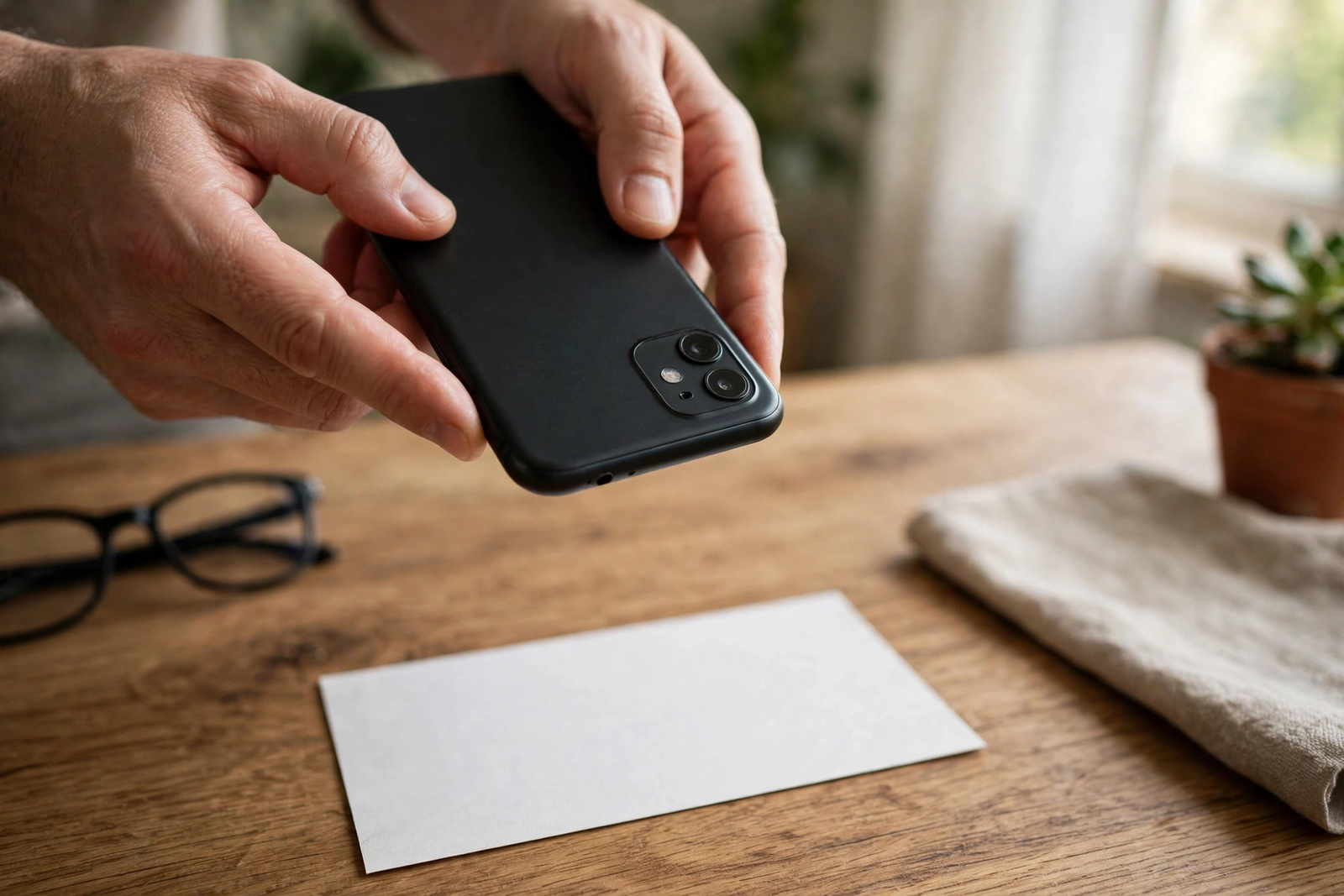
If you have a bank account and a smartphone, this is the quietest way to handle the problem. Mobile check deposit asks for photos of the front and back of the check, not a photo ID. Endorse the back, snap both sides in good light, and submit. The money lands in your account, usually with part of it available the next business day and the rest after the hold clears.
The catch is the hold. Mobile deposits on larger checks can take two to five business days to fully clear. Still, when you are figuring out how to cash a check without ID, a few days of waiting beats a flat refusal at the counter.
5. Endorse the Check to Someone You Trust
This is the old-school fix, and it is completely legal. It is called a special endorsement: on the back of the check, you write “Pay to the order of” followed by the person’s full name, then sign underneath. That person can then deposit or cash the check using their own ID.
Only do this with someone you trust completely — once endorsed over, that person legally controls the money. Confirm with their bank first that it accepts third-party checks (some refuse them), and go with them if you can. Never sign a blank endorsement: a check with just your signature on the back can be cashed by whoever picks it up.
6. Use a Check-Cashing App
Apps like Ingo Money, PayPal, and Netspend let you photograph a check and get the money without walking into a branch. Ingo Money charges 1% to 5% of the check amount, with a $5 minimum on most checks. PayPal’s check-cashing feature works similarly if you already have an account there.
These apps are the priciest option here — 5% of a $2,000 check is $100. Use them when speed matters more than cost, and read the fee screen before confirming: the “instant” tier costs more than the standard few-days tier.
What to Bring Instead of a Photo ID
No single backup document replaces a driver’s license on its own. Banks and stores look for a stack of documents that together prove who you are. Gather as many of these as you can before you leave the house:
- Social Security card
- Birth certificate (original or certified copy)
- Recent utility bill or bank statement with your name and address
- Expired driver’s license or state ID (often accepted alongside another document)
- Voter registration card
- Employer letter or pay stub showing your name
- Student ID or work badge
Two or three together beat one alone — an expired license paired with a Social Security card often satisfies a teller.
Fees at a Glance
Here is what each route costs when you need to know how to cash a check without ID:
| Method | Typical cost | Speed |
|---|---|---|
| Your own bank (deposit) | Free | 1–5 business days for full availability |
| Issuing bank (non-customer) | $5–$10 per check | Same day |
| Walmart | $4 up to $1,000; $8 up to $5,000 | Same day |
| Check-cashing store | 1%–3% of the check | Same day |
| Mobile deposit | Free | 1–5 business days |
| Check-cashing app | 1%–5%, $5 minimum | Minutes to a few days |
Mistakes That Get Your Check Refused
First, do not sign the back of the check before you arrive. A pre-signed check looks like a bearer instrument, and many tellers will refuse it on sight. Sign it at the counter, in front of the teller, when asked.
Second, do not hand a check to a stranger or a “check-cashing service” you found in a social media ad. Scammers love people in this exact situation, and a signed-over check is gone for good once it leaves your hands.
Third, do not argue your way past a refusal. If one branch says no, thank them, and try another branch or another method on this list. Policies vary by branch, and a calm second attempt somewhere else often works where a confrontation would not — a useful lesson for anyone learning how to cash a check without ID.
Frequently Asked Questions
Can I cash a check without ID at Walmart?
Yes, in most cases. Walmart cashes payroll, government, and tax refund checks with a fee of up to $4 for checks up to $1,000 and $8 up to $5,000. Bring whatever secondary documents you have, and note that two-party personal checks are capped at $200.
Can I deposit a check without ID using my bank’s app?
Yes. Mobile check deposit verifies the check itself, not your face. You need an existing bank account and a phone camera, and you should expect a hold of one to five business days on larger amounts.
What if I have no ID at all — not even a Social Security card?
Your realistic options narrow to endorsing the check to a trusted person with valid ID, or depositing it through a bank account you already hold. If neither exists, your next step is getting a replacement ID from your state’s DMV or a Social Security card replacement — both are free or cheap, and both unlock every method on this list.
Do banks have to cash a check without ID?
No. Banks are allowed to require identification before cashing a check, and many will refuse. The federal rules require banks to have backup verification procedures, but each bank writes its own policy on which documents it accepts. That is why calling ahead matters so much.
The Bottom Line
Figuring out how to cash a check without ID comes down to one principle: use the relationship you already have. Your own bank, your bank’s app, and the bank named on the check are your cheapest and safest routes. Retail stores and apps fill the gap when those fail, at a price. Bring every backup document you own, sign nothing until you are at the counter, and never hand a signed check to someone you do not fully trust.
Disclaimer: This article is general educational information, not financial advice. Bank policies on identification vary by institution and branch, so confirm requirements with your bank before visiting.