

A money order looks simple — it’s a single sheet of paper with a few blank lines. But those blank lines are unforgiving. Write the wrong name, scribble out a mistake, or sign in the wrong spot, and the thing can become worthless, costing you a cancellation fee and a second trip back to the counter.
The good news: once you know how to fill out a money order properly, it takes about two minutes. This guide walks you through each line in order, what to do if you mess one up, and how much the whole thing costs these days.
First, the 30-Second Version: What a Money Order Is
A money order is a prepaid paper payment. You hand the seller the full amount in cash (or on a debit card) plus a small fee, and they print a document for that exact amount. The recipient cashes or deposits it like a check. Because the money is paid upfront, a money order can’t bounce the way a personal check can — which is exactly why landlords, used-car sellers, and government offices that won’t take personal checks often accept money orders.
You don’t need a bank account to buy one, which makes them a workhorse payment method for anyone who pays rent or bills in cash. (If you’re still cash-only and thinking about opening an account, our guide on how to open a bank account online walks through the whole process.)
Where to Buy a Money Order and What It Costs
Most people buy money orders at the post office, but they’re sold at Walmart, many grocery stores, convenience stores, and banks. Prices and limits vary quite a bit — and once you’ve bought one, the next question is how to fill out a money order without a single mistake:
| Issuer | Typical fee | Max per money order |
|---|---|---|
| USPS (post office) | $2.55 up to $500; $3.60 for $500.01–$1,000 | $1,000 |
| Walmart | Around $1–$1.50 | $1,000 |
| Western Union / MoneyGram agents | $1–$5 depending on amount | $1,000 |
| Banks | $5–$10 (often the priciest option) | $1,000 |
Almost every issuer caps a single money order at $1,000. If your rent is $1,400, you’ll need to buy two money orders and fill out both completely. Annoying, but that’s the anti-fraud design — it limits how much can move on one document.
Bring cash or a debit card. Most places won’t take a credit card for a money order, and the ones that do will treat it as a cash advance with steep fees. Not worth it.
How to Fill Out a Money Order in 5 Steps
Fill the money order out before you leave the counter — ideally while you’re still standing in front of the clerk. A blank or half-filled money order works like cash: anyone who finds it can write in their own name. Use black or blue ink; red or green ink can trip up bank scanners.
Step 1: Write the recipient’s name on the “Pay to” line
Find the line labeled “Pay to the Order Of,” “Pay to,” or “Payee” and write the full legal name of the person or business you’re paying. This is the single most important line on the document.
Get the name exactly right — learning how to fill out a money order starts here, because this is the single most important line on the document. If your lease says rent goes to “Sunrise Property Management LLC,” write that — not your landlord’s first name. A mismatched payee name can get the money order rejected by the recipient’s bank, and the delay can trigger a late fee. When in doubt, ask the payee for the exact wording before you buy the money order.
Step 2: Add your name and address
Look for the section labeled “From,” “Sender,” “Purchaser,” or “Remitter.” Write your full legal name and current mailing address here. This tells the recipient who sent the payment and gives them a way to reach you if something goes wrong. Some money orders only ask for your name; others want the full address. Fill in whatever fields are printed.
Step 3: Fill in the memo or account-number line
Most money orders have a memo line, sometimes labeled “Payment For” or “Account Number.” Use it to say what the payment covers: “October rent,” your utility account number, or an invoice reference. This is optional for personal gifts but close to mandatory for bills — it’s what helps the recipient apply your payment to the right account instead of letting it float in limbo.
Step 4: Sign the front
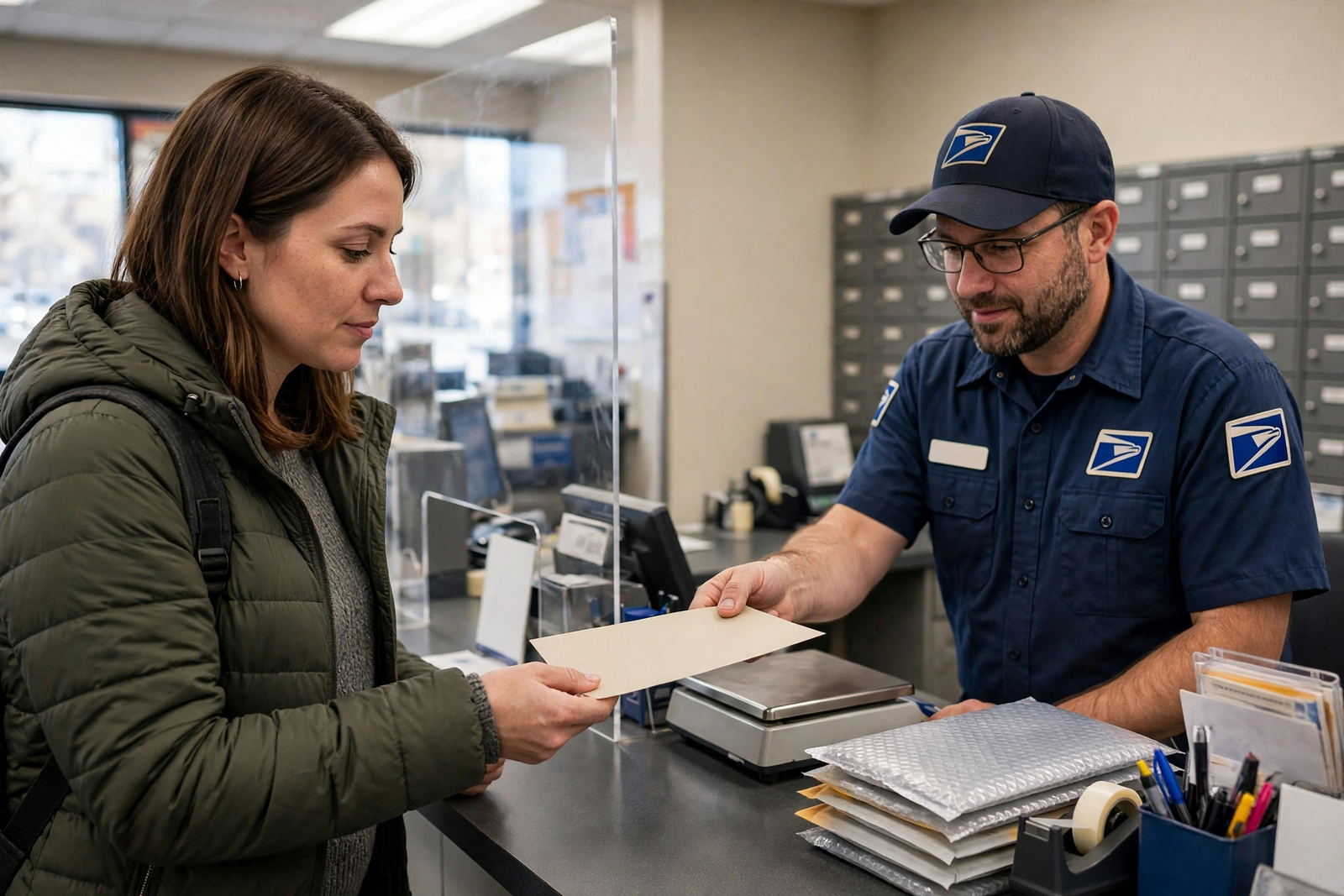
Sign your name on the front where it says “Purchaser’s Signature,” “Drawer,” or “Signer.” Use your full legal name, not a nickname.
Do not sign the back. The back has an endorsement area reserved for the recipient to sign when they cash or deposit it. If you sign the back yourself, the money order looks altered — and altered money orders get refused.
Step 5: Keep the receipt and take a photo
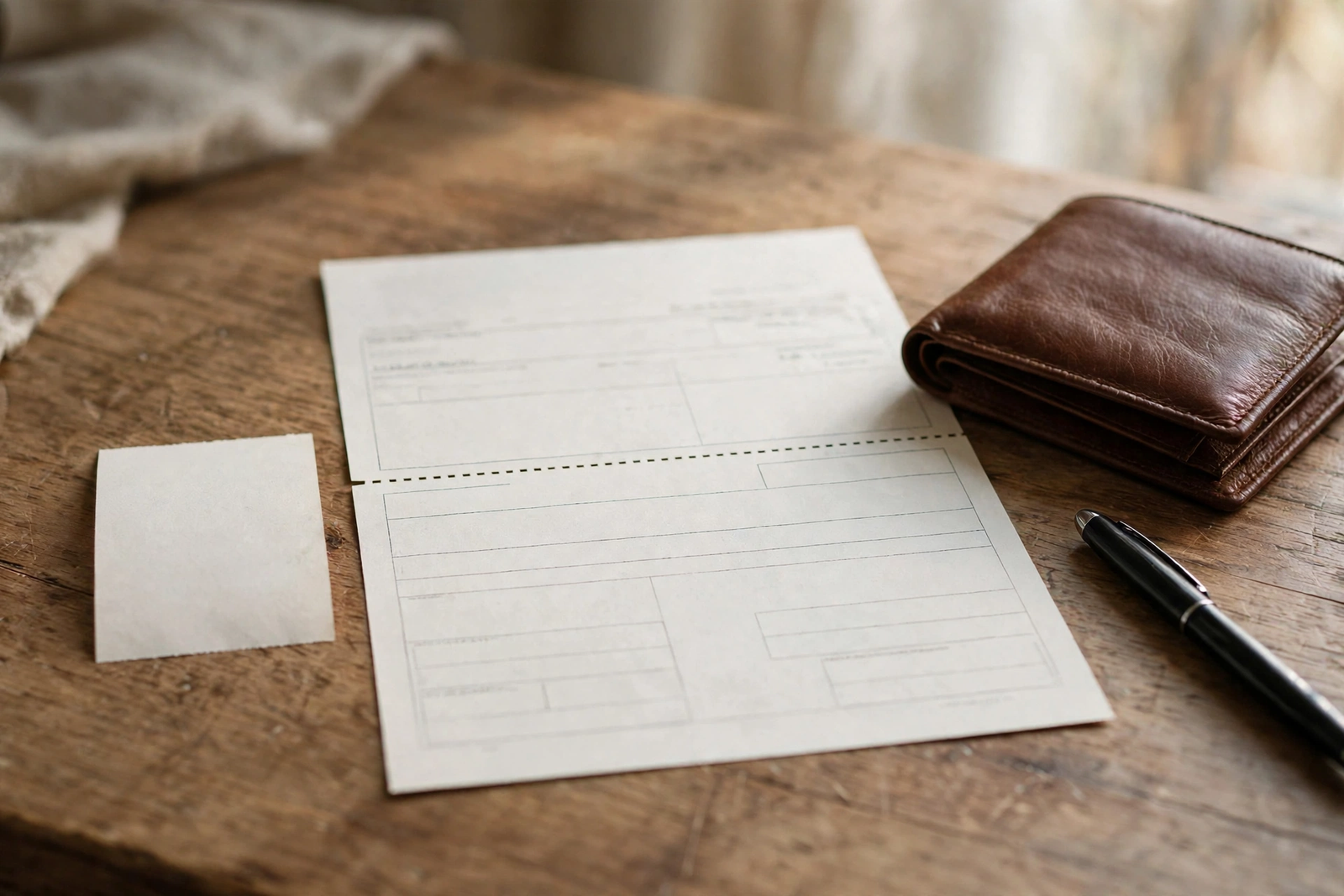
Every money order comes with a detachable receipt stub. Do not throw it away. That stub has the serial number, and it’s your only proof of purchase and your only path to a refund if the money order gets lost or stolen. Knowing how to fill out a money order is only half the job — keeping the proof is the other half. Before you hand the money order over — or drop it in the mail — photograph the front and back of the completed document. The receipt proves you bought it; the photo proves you made it payable to the right person for the right amount. If a payment dispute ever goes anywhere serious, that distinction matters.
The 3 Mistakes That Ruin a Money Order
1. Crossing out or correcting anything. This is the big one, and it’s the reason learning how to fill out a money order correctly the first time matters more than it looks. White-out, scratch-outs, and handwritten corrections all signal tampering. Under commercial law, a visibly altered negotiable instrument can be treated as void — in practice, a bank teller who sees overwriting will simply refuse it. If you make a mistake, don’t try to fix it. See the refund section below.
2. Leaving the payee line blank. A money order with a blank payee line is as dangerous as carrying loose cash. Fill it in the moment you buy it, at the counter, before it goes into your pocket.
3. Signing the back. As covered above, the back belongs to the recipient. Your signature goes on the front only.
What If You Make a Mistake or Lose the Money Order?
A mistake on a money order generally can’t be fixed by rewriting — you have to cancel it through the issuer, pay a processing fee, and get a replacement or refund.
- USPS: Bring the original money order, the receipt stub, and a photo ID to any post office and fill out PS Form 6401. There’s a $21 processing fee, and the refund comes 60 days or more after the original issue date. Good news: if the money order is still in your hands and just spoiled, USPS replaces it for free when you bring both the original and the receipt.
- Western Union: Fees are tiered — about $5 for money orders between $5 and $100, $15 for $100 or more, and higher (up to $30) if you don’t have the receipt.
- MoneyGram: No separate inquiry fee in most cases, but the original purchase fee isn’t refunded.
If the money order was lost or stolen before the recipient cashed it, go back to the issuer immediately with your receipt. The issuer has to verify it hasn’t been cashed yet, which is why refunds take weeks. If it was already cashed, the issuer will give you a copy of the cashed document instead of a refund — at that point you’re filing a fraud report, not a refund claim. Unlike a personal check, you can’t put a “stop payment” on a money order the way our stop payment guide describes for checks; cancellation goes through the issuer’s claim process.
Frequently Asked Questions
Quick answers to the questions people ask most after learning how to fill out a money order:
Can I fill out a money order in pencil?
Don’t. Use black or blue ink only. Pencil can be erased and rewritten, so banks treat penciled money orders as suspicious — many will refuse them outright.
How long is a money order good for?
Money orders don’t expire in the way a coupon does, but they can become harder to cash over time. Some issuers start charging inactivity or service fees after 1–3 years, and some states treat uncashed money orders as abandoned property after a few years. Cash or deposit it promptly.
Can I get a money order for more than $1,000?
Not as a single document from the usual issuers. Buy multiple money orders, or ask your bank about a cashier’s check, which handles larger amounts.
What happens if I write the wrong amount?
The amount is pre-printed by the issuer when you buy it — you don’t fill that part in. If the printed amount is wrong, point it out at the counter immediately and have them reissue it on the spot.
Do I need ID to buy a money order?
Usually not for small amounts, but bring a government-issued photo ID anyway. You’ll need it for any refund or replacement claim, and some locations require ID for purchases above a threshold.
Disclaimer: This article is general educational information, not financial advice. Fees and procedures vary by issuer and location — confirm current costs with the place where you buy your money order.