


Here’s the catch-22 nobody warns you about: you need credit history to get approved for credit, but you can’t build history without getting approved first. If you’ve never had a credit card or a loan, you’re “credit invisible” — and to lenders, you basically don’t exist.
The good news? Learning how to build credit from scratch is one of the most straightforward money projects there is. No tricks, no hacks. Borrow a little, pay it back on time, repeat. Six months of that and you’ll have a real score. A year of it and doors start opening — apartments, car loans, better cards.
I wish someone had laid this out plainly for me at 22. So here’s the whole playbook.
Table of Contents


How Credit Scores Actually Work (the 60-Second Version)
Your score is a number from 300 to 850 that answers one question: how reliably do you handle borrowed money? Two factors do almost all the work — payment history (do you pay on time?) and credit utilization (how much of your available credit are you using?). Together they’re roughly two-thirds of your score.
Everything else — how long you’ve had accounts, your mix of credit types, recent applications — matters less, especially at the start. So the entire game, boiled down: get one account that reports to the bureaus, use a little of it, and never miss a payment. That’s it. That’s the whole strategy for anyone looking to build credit from scratch.
5 Ways to Build Credit From Scratch That Actually Work
1. Start with a secured credit card
This is the front door for most people learning to build credit from scratch. You put down a refundable deposit — usually $200 to $500 — and that becomes your credit limit. Use it for one small recurring thing, like a streaming subscription or gas, and pay it off in full every month.
After 6–12 months of on-time payments, most issuers upgrade you to a regular unsecured card and hand your deposit back. The Discover it® Secured and Capital One Platinum Secured are the usual recommendations for a reason: no annual fee, and they actually graduate you instead of keeping you stuck. (Curious what changes once you graduate? Here’s how unsecured credit cards work.)
2. Become an authorized user
If a parent or partner has a credit card with a spotless payment history, ask them to add you as an authorized user. Their history on that account starts showing up on your report — you can inherit years of good history overnight, sometimes without ever touching the card.
One critical check first: confirm the card issuer reports authorized users to all three bureaus. Most big issuers do, but verify before counting on it. And only do this with someone whose habits you trust completely — their missed payment becomes your missed payment too.
3. Try a credit-builder loan
These are built backwards on purpose. Instead of getting money upfront, you make monthly payments into a locked savings account, and the lender reports every payment to the bureaus. At the end — usually 12 to 24 months — you get the money back plus a track record.
Companies like Self and MoneyLion offer them, as do many credit unions. Expect to pay around $25–$50 a month. Read the fees before signing; the good ones are cheap, the bad ones aren’t worth it.
4. Get your rent and bills counted
You’re already paying rent, utilities, and your phone bill every month — some services will put those payments on your credit report. Experian Boost is free and adds an average of about 13 points by counting utility and streaming payments. Rental Kharma and Boom do the same for rent.
It’s not going to build a score by itself, but it’s free points for money you’re already spending. Ten minutes of setup, zero ongoing effort.
5. Student? Check student cards
If you’re in school, student credit cards are designed exactly for you — no history required, low limits, usually no annual fee. Same rules apply: small purchases, paid in full, on time. It’s the easiest on-ramp in the entire credit system, so don’t overlook it if you qualify.

What Your First 6 Months Could Look Like
Let me make this concrete. Say you’re Maya, 22, starting from zero:
Month 1: You open a secured card with a $300 deposit. You put your $15.99 streaming subscription on it and set up autopay for the full balance. Utilization: about 5%. Perfect.
Months 2–5: Same routine. Subscription, autopay, full payoff. You also sign up for Experian Boost and connect your utility bills. Nothing dramatic happens — and that’s the point. Boring is good here.
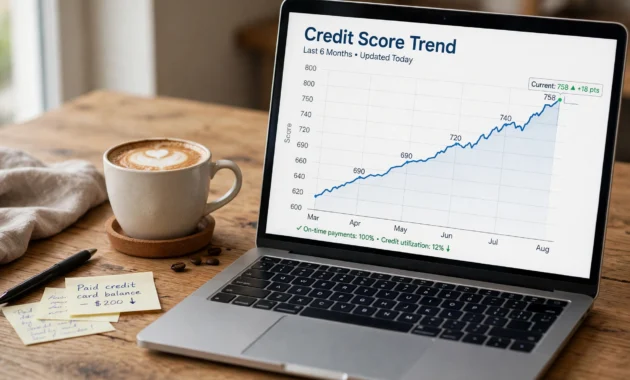
Month 6: Your first FICO score appears. With six months of perfect payments and tiny utilization, it often lands somewhere in the high 600s. Not elite, but real — and landlords and lenders can finally see you.
Months 7–12: More of the same. Around the one-year mark, ask your issuer about graduating to an unsecured card and getting your deposit back. Plenty of people cross 700 by month 12. The timeline isn’t magic; it’s just consistency compounding.
The Two Habits That Do 90% of the Work
Pay on time, every time. One missed payment on a young credit file can knock 50–100 points off — devastating when you only have 680 to lose. Set up autopay for at least the minimum as a safety net, then manually pay the full balance each month. Autopay is the net, not the plan.
Keep utilization low. The rule of thumb is under 30% of your limit, but under 10% is where the real magic happens. On a $300 limit, that’s $30. This is why the “one small subscription” strategy works so well — it keeps utilization tiny without any willpower.
And once a year, pull your free reports at AnnualCreditReport.com and scan for errors. Mistakes on credit files are more common than you’d think, and disputing a wrong late payment is one of the fastest legitimate score boosts there is.
What NOT to Do
- Don’t apply for five cards in a week. Every application triggers a hard inquiry, and a stack of them in a short window screams desperation to lenders. One card is enough to start.
- Don’t carry a balance “to build credit faster.” This is the most persistent myth in personal finance. Paying interest doesn’t help your score — paying on time does. Pay in full.
- Don’t close your first card after a year. Length of credit history matters, and that secured card is your oldest account. Keep it open (ideally with no annual fee) even after better cards arrive.
- Don’t co-sign someone else’s loan to “help.” Their missed payments become your missed payments. Hard pass until your own file is solid.
One more distinction worth knowing: your banking history is completely separate from your credit file — a checking account doesn’t build credit, and ChexSystems (the banking equivalent of a credit report) is its own system. If you’ve been denied a bank account before, that’s a different problem with a different fix.
Frequently Asked Questions
How long does it take to build credit from scratch?
You’ll typically see your first score after about six months of reported account activity. A solid score in the 700s usually takes around 12 months of consistent on-time payments. There’s no shortcut — but there’s also no mystery to it.
Does checking my own credit score hurt it?
No. Checking your own score is a “soft inquiry” and never affects it. Check freely — monitoring monthly is actually how you catch errors and fraud early.
Can I build credit without a credit card?
Yes. Credit-builder loans and rent-reporting services both work without a card. But a secured card remains the fastest, cheapest route for most people.
Do debit cards or bank accounts build credit?
No — and this trips up a lot of people. Debit cards pull from money you already have, so there’s nothing to “repay” and nothing gets reported to the bureaus. Only credit products (cards, loans) build a credit file.
Disclaimer: This article is for general educational purposes only and is not financial advice. Credit products involve real costs and risks — always read the terms before applying, and consider speaking with a financial professional about your situation.